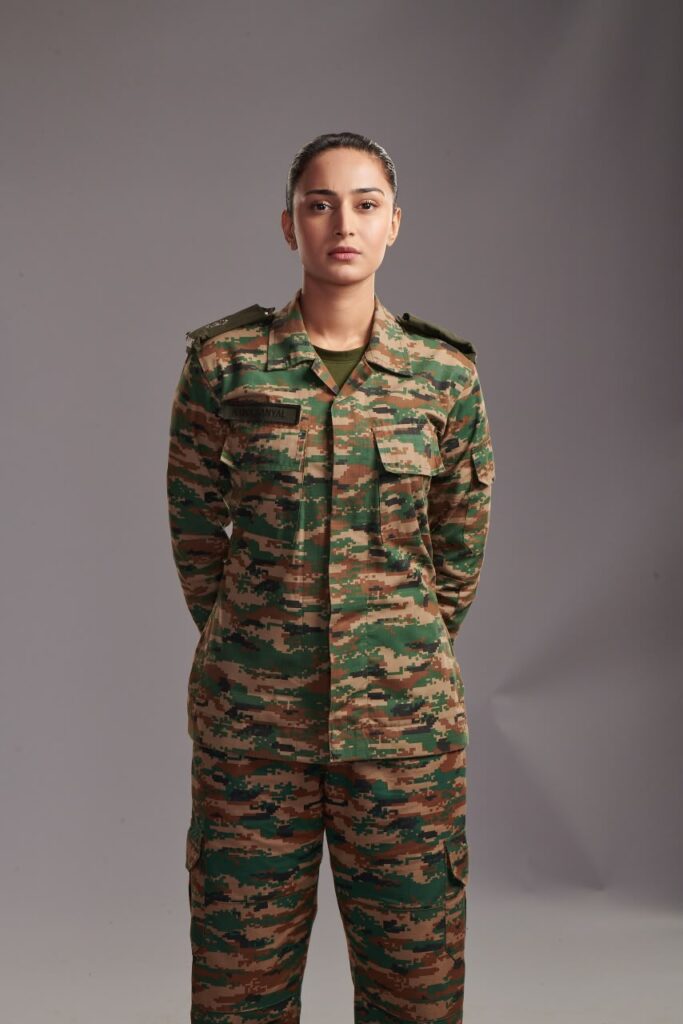
COLORS’ ‘108 Base Hospital Uri’ premiered with a bang on Independence Day, bringing a powerful new dimension to the meaning of patriotism. Going beyond the battlefield and the familiar stories of war, the finite series shines a spotlight on the unsung heroes who fight a different kind of battle every day – doctors, nurses and medical personnel who stand between life and death, racing against time to save the soldiers who have risked everything for the nation. Receiving appreciation from audiences, the show has also pioneered the genre of the army hospital drama, taking viewers into a world where Seva, Saahas aur Samarpan become the ultimate weapons. Making her much-awaited comeback after five years, Erica Fernandes found in the show an opportunity to step into a role unlike any she has played before.
1. What made you say yes to the show?
A. I wanted to do something different from the kind of work I had done before, because those roles had started becoming monotonous for me. I wanted to return with something that has weight, and this show gave me that. It was a very differently made show, with a finite 30-episode format and real locations, which really interested me. When I saw the presentation and understood the kind of project it was, I felt that this is the kind of show I’d like to be part of.
2. What are the themes that this show is going to explore?
A. We’ve seen the battlefield, but never the story of what happens inside an army hospital, and that is what makes the show different. Usually, when we see army-based stories, we see battlefields, wars and how soldiers get injured. But 108 Base Hospital Uri looks at what happens after that, when those injured soldiers reach an army hospital and begin their journey towards recovery. We are showing the stories of soldiers who are injured on the battlefield, and even civilians who sometimes come to army hospitals for treatment. It’s a very human side of the army that people may not have seen before.
3. How was this different from your work in the past?
A. The biggest difference was that I didn’t want to repeat the same things I had done earlier. The kind of roles I was doing had become monotonous, and I didn’t want to go back to doing the same thing again. This show also gave me the opportunity to work on real locations. When you shoot on sets, there is a certain atmosphere, but when you’re shooting in lived-in houses, hospitals and other real locations, the characters and performances come alive differently. That was something very interesting for me, and it made this project feel very different from what I had done before.
4. Could you tell us something about the scale of the show?
A. The scale of the show comes from the fact that it is being shot on real locations and is based around an army hospital. A lot of shows and films have been made about the army, but this is the first show based on an army hospital. We also had army officials around us on set who guided us through the smallest details. They were extremely particular about the uniforms, how we wore them and even things as minute as how we tied our shoelaces. We had to keep all those details in mind to make the portrayal authentic.
5. How did you prep for this role?
A. The army already has a very specific way of doing things, so we had army officials around us who guided us throughout the process. They were very particular about our uniforms and every small detail of how we presented ourselves. I also feel that focus is extremely important when you’re dealing with an army-based role. There is a lot of physical and mental training involved in the army, and we had to understand those aspects while portraying these characters.
6. What was it like shooting in Kashmir?
A. What really stayed with me was discovering the reality of the army hospital itself. I didn’t even know that such a hospital existed. When I found out about it and watched the documentary, seeing the medical devices they use and the way they work to save people’s lives was an eye-opening experience.
There are so many things we simply don’t know about, and when you learn about the work being done there, you just feel so proud that you’re an Indian. I’m an Indian who lives in Dubai, but I’m still an Indian.
7. Any message for the fans?
A. Thank you very much for all the support you’ve given me over the years. Please continue to support me and watch the show. It is very different, and you’ll see me in a very different avatar. I really hope the audience enjoys this different side of me and the story we’re bringing to television. Don’t forget to watch 108 Base Hospital – Uri every Saturday and Sunday on COLORS and JioHotstar at 8:00 PM.
‘108 Base Hospital – Uri’ airs every Saturday-Sunday at 8:00 PM only on COLORS and JioHotstar.